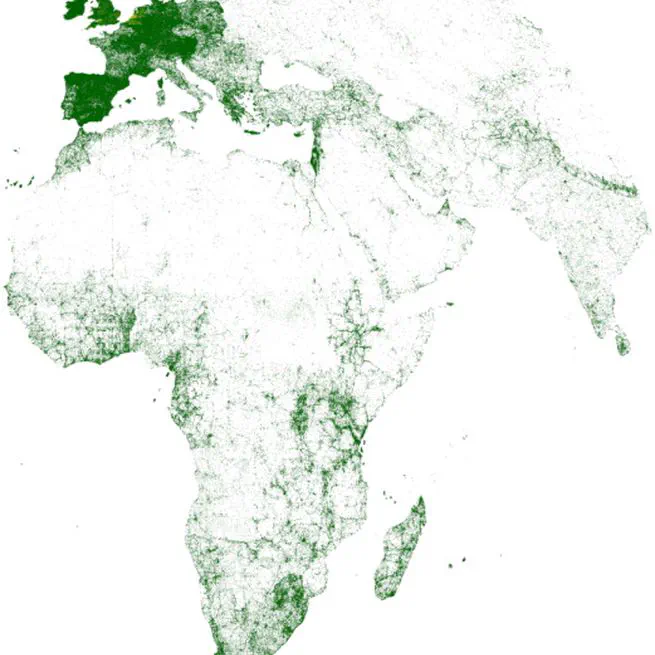
Improved species-occurrence predictions in data-poor regions: using large-scale data and bias correction with down-weighted Poisson regression and Maxent
Jan 1, 2018
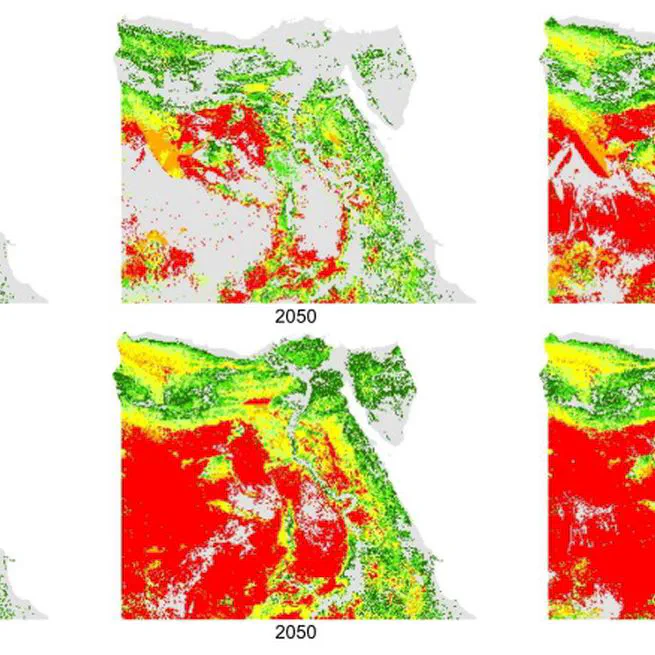
Conserving Egypt's reptiles under climate change
Apr 1, 2016

Distribution of the Egyptian reptiles under current and future climates
Advisor: Prof. Francis Gilbert, School of Life Sciences, Nottingham University, Nottingham, UK.
Jan 1, 2012
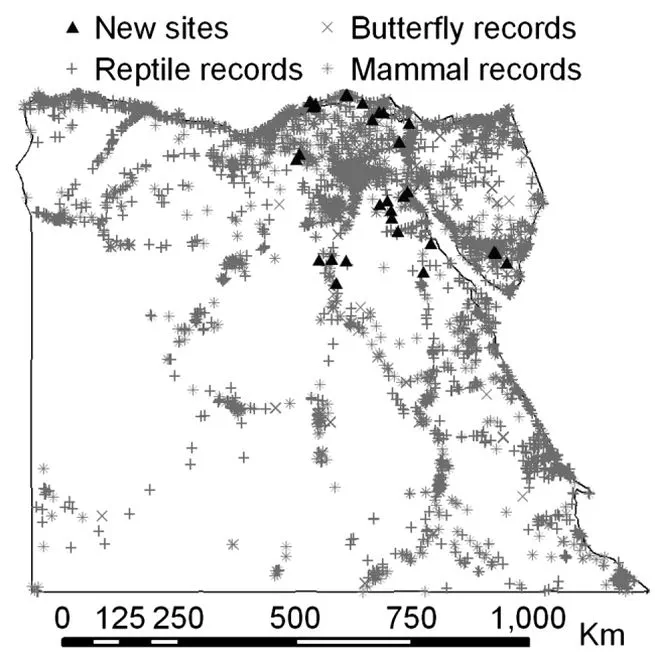
Testing the accuracy of species distribution models using species records from a new field survey
Jan 1, 2010
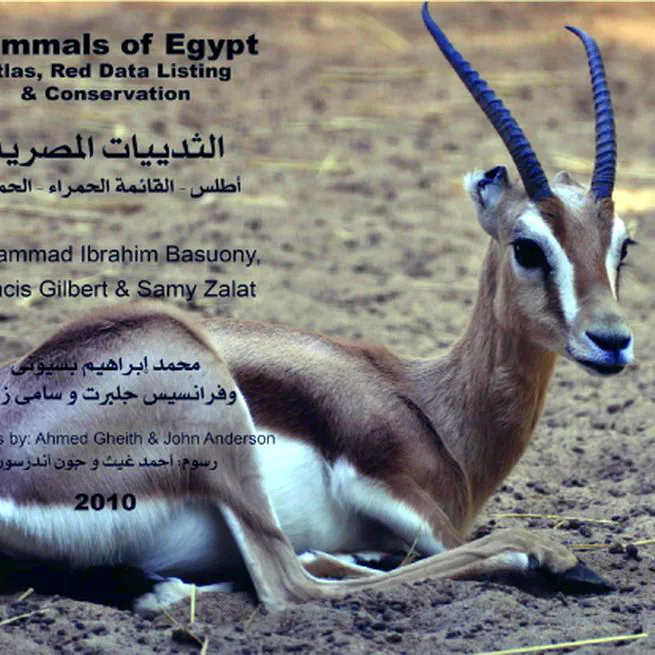
Mammals of Egypt: atlas, Red Data listing and conservation
There are 110 species of mammals recorded from Egypt. The 93 terrestrial species are reasonably well known, but the marine mammals are very poorly known with at least 17 recorded species.
Jan 1, 2010
Effect of characteristics of butterfly species on the accuracy of distribution models in an arid environment
Jan 1, 2009
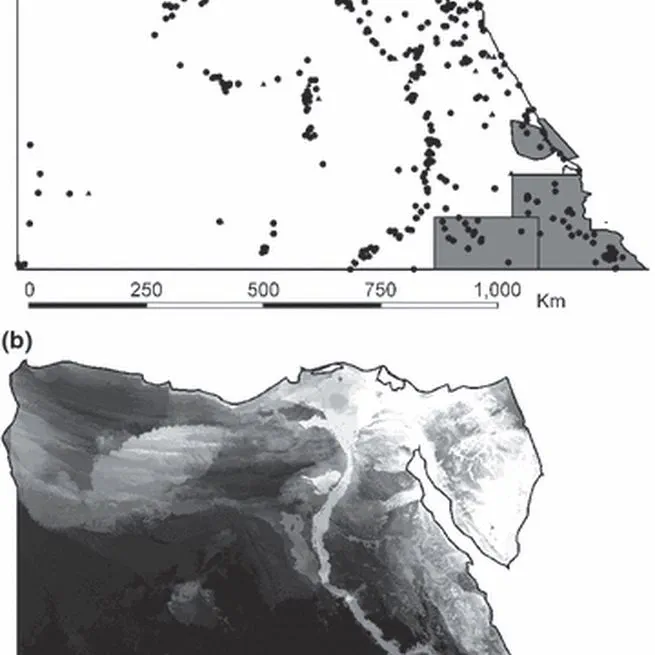
Climate-based models of spatial patterns of species richness in Egypt’s butterfly and mammal fauna
Jan 1, 2009
BioMap project
The Egyptian BioMap project (Biodiversity monitoring and assessment project; 2004-2008), funded by the Italian Cooperation in Egypt and the United Nations Development Programme (UNDP), was an initiative aimed at documenting and preserving the biodiversity of Egypt. The project was led by Prof. Samy Zalat and Prof. Francis Gilbert. Read more. Overall, the Egyptian BioMap project sought to create a foundational resource for conserving Egypt’s rich biodiversity and to promote sustainable environmental practices through data-driven approaches and collaboration among various stakeholders. The key objectives and activities of the project included: Biodiversity Documentation: The primary goal was to create a comprehensive database of Egypt’s biological diversity, including flora and fauna across various ecosystems, from which a stream of publications has resulted aimed at improving the scientific basis of conservation decision-making in Egypt, including the impact of climate change. The project utilized GIS technology to map and analyze the distribution of species and habitats, providing a spatial understanding of biodiversity patterns. Conservation Planning: By identifying critical areas for conservation, the BioMap project aimed to support the creation and management of protected areas to preserve threatened species and habitats. Capacity Building, Public Awareness and Education: Training programs and workshops were conducted to enhance the skills of local scientists, researchers, and conservationists in biodiversity monitoring and data management. The project also focused on raising public awareness about the importance of biodiversity conservation through educational campaigns and community engagement. After my undergraduate studies, I joined BioMAP project as an ecologist forcusing mainly on modelling the distribution of Egyptian fauna and flora using species distribution models. I contributed to the following publications: Gilbert F & Zalat S (2008) Butterflies of Egypt: Atlas, Red Data listing & Conservation. Illustrated by Ahmed Gheith. BioMAP, EEAA, Cairo. 196 pp. Newbold T, Reader T, Zalat S, El-Gabbas A & Gilbert F. (2009) Climate-based models of spatial patterns of species richness in Egypt’s butterfly and mammal fauna. Journal of Biogeography 36: 2085-95. Newbold T, Reader T, Zalat S, El-Gabbas A & Gilbert F. (2009) Effect of characteristics of butterfly species on the accuracy of distribution models in an arid environment. Biodiversity & Conservation 18: 3629-41. Brading P, El-Gabbass A, Zalat S & Gilbert F. (2009) Biodiversity economics: the value of pollination services to Egypt. Egyptian Journal of Biology 11: 45-51. Newbold T, Reader T, El-Gabbas A, Berg W, Shohdi WM, Zalat S, Baha El Din S & Gilbert F. (2010) Testing the accuracy of species distribution models using species records from a new field survey. Oikos 119: 1326-34. Basuony M, Gilbert F & Zalat S (2010) Mammals of Egypt: Atlas, Red Data listing & Conservation. Illustrated by Ahmed Gheith. BioMAP & CultNat, EEAA & Bibliotheca Alexandrina, Cairo. 286 pp.
Jan 1, 2009
Butterflies of Egypt: atlas, Red Data listing and conservation
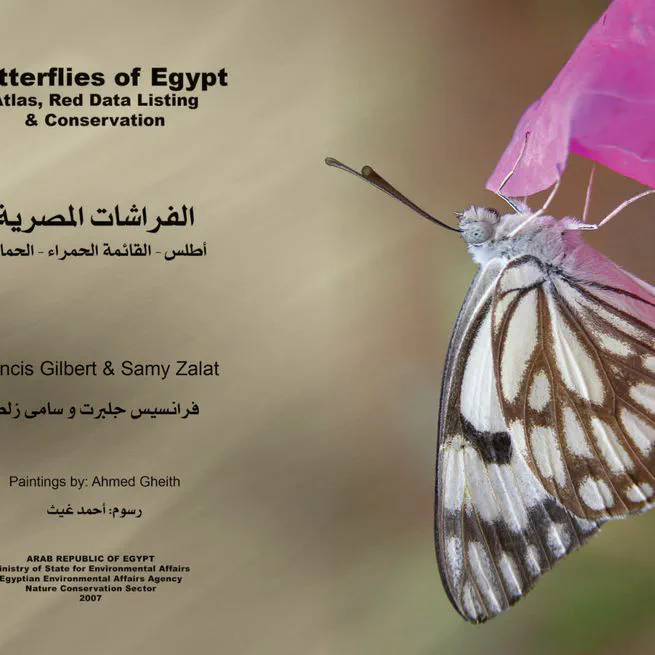
There are 61 species of butterfly recorded from Egypt, two of them each with two subspecies recorded, making 63 named taxa in total.Two species are endemic to Egypt. The Sinai Baton Blue Pseudophilotes sinaicus is considered to be Critically Endangered under the joint threats of global warming, overgrazing and over-collection of medicinal plants.
Jan 1, 2008